Things to Do in San Salvador in October
October weather, activities, events & insider tips
Low Season · Budget Friendly
October Weather in San Salvador
Long-run averages for October
85°F (29°C)
High Temp
67°F (19°C)
Low Temp
9.7 inches (246 mm)
Rainfall
84%
Humidity
11
Sunny-Day UV
⚠ Flash flooding occurs in lower lying parts of San Salvador during the heaviest October downpours. This happens around the Centro Histórico and near river channels. Avoid underpasses, low bridges, and streets that run parallel to quebradas during active storms. The water rises faster than you expect.
⚠ October falls within the Eastern Pacific tropical storm season. Direct landfalls on El Salvador are uncommon. Peripheral moisture from offshore systems can trigger multiday periods of continuous heavy rain. This brings associated landslide risk on the volcanic slopes. Monitor weather forecasts if you have highland hikes planned.
⚠ Volcanic hiking trails become significantly more hazardous when wet. The loose scoria and ash soil on El Boquerón and Santa Ana gives way underfoot without warning. Park authorities may close trails after heavy rains with no advance notice. Always confirm trail status the morning of a planned hike. Do not confirm the night before.
Is October Right for You?
Weigh the advantages and considerations before booking
Advantages
- + October marks the rainy season's final stretch. The volcanic slopes around San Salvador turn their deepest green. Every quebrada runs full and loud. Coffee fincas above Santa Tecla drip with lushness that vanishes by January. The landscape you photograph now looks nothing like the baked brown terrain of dry season.
- + Tourist numbers hit their annual floor. You'll stand at El Boquerón's crater rim with maybe two other groups instead of twenty. Civil war memorial sites allow the quiet attention they deserve. Comedores in the Centro Histórico won't have another foreign face at the table.
- + Accommodation prices drop meaningfully across the city during rainy season. Availability opens up in Colonia Escalón and Zona Rosa, neighborhoods that book out during December-to-March peak. Your budget stretches further on tours and transport too. Operators have capacity to fill.
- + October delivers the most consistent Pacific swells of the year. For surfers, reef and beach breaks around El Tunco and La Libertad fire on overhead-to-double-overhead south swells. The mechanical regularity makes this one of Central America's premier surf windows.
Considerations
- − The rain is real and unavoidable. 246 mm (9.7 inches) across the month means most afternoons face heavy, sometimes violent downpours. Lower-lying sections of San Salvador, around Centro Histórico and near river channels, can flood during hardest storms. Flexibility isn't optional. It's the price of admission.
- − Volcanic hiking trails become treacherous when wet. Loose scoria and ash soil on El Boquerón and Santa Ana volcano turns to something between clay and grease underfoot. Park authorities may close trails after heavy rains without advance notice. Canceled summit days are a real possibility.
- − Powerful October swells that draw surfers also make casual ocean swimming dangerous. Rip currents at most accessible beaches near San Salvador pull hard. The rocky volcanic bottom is unforgiving. This is not the month for lazy beach swimming.
Best Activities in October
Top things to do during your visit
El Boquerón Volcano Crater Hike
The San Salvador volcano sits so close to the city that on clear mornings you spot its rim from Zona Rosa. The drive to the trailhead takes barely half an hour. October's rain transforms crater walls into dripping vertical gardens: ferns, orchids, and bromeliads clinging to rock still warm from beneath. The hike into El Boquerón's crater, roughly 1.5 km (0.9 miles) across and dropping about 500 m (1,640 ft), suits most fitness levels. You'll want proper boots. Volcanic soil turns to soap when wet. Mornings tend clear before noon, with clouds building around 1 PM. Early start is non-negotiable. The first hour through canopy feels like entering a greenhouse: air thick with mulchy scent of decomposing leaves, constant drip from overhead green, howler monkeys calling above the fog line. By afternoon storms roll in. You do not want to be on exposed ridge when lightning starts. The payoff for early alarm is a crater view most San Salvador residents have never seen in person, ringed by cloud forest and quiet enough to hear your own breathing.
Booking Tip: Book through licensed operators with safety equipment and real-time weather-monitoring protocols. Do this ideally at least a week ahead during October (see current options in the booking section below). Early-morning departures, typically around 6 to 7 AM, are standard and non-negotiable this month. Any operator suggesting afternoon start does not know the mountain.
Santa Ana Volcano and Coatepeque Lake Day Trip
The strongest day trip from San Salvador runs northwest roughly 70 km (44 miles) to Cerro Verde National Park. There the Santa Ana volcano, El Salvador's highest at 2,381 m (7,812 ft), holds a turquoise-green crater lake that looks almost artificial against dark volcanic rock. October is one of the more dramatic months for this hike. Clouds sit lower, often breaking apart mid-trail to reveal the crater in theatrical shafts of light. Surrounding cloud forest reaches its densest, most alive state. The ascent is about 4 km (2.5 miles) one way and takes two to three hours. Sulfur smell from fumaroles hits you well before reaching the rim. Descent typically brings you to Coatepeque Lake, a massive caldera lake where thermal springs warm the water along certain shore stretches. Sinking into volcanically heated water while rain-cooled air hovers at maybe 20°C (68°F) around you is strange and wonderful. The faint mineral tang reminds you the geology underneath is still very much alive. Steam lifts off the lake surface in early morning like the whole caldera is exhaling.
Booking Tip: Private transport makes the most sense. Public bus connections require multiple transfers and eat half the day. Book at least a week ahead through operators experienced with wet-weather highland hiking (see current options in the booking section below). Full-day trips typically combine volcano hike with lakeside time and late lunch in coffee country around Juayúan or Apaneca.
Pacific Coast Surfing at El Tunco and La Libertad
El Tunco sits about 40 km (25 miles) south of San Salvador. The highway drops to the coast here. The Pacific delivers some of Central America's most consistent surf. October brings the long-period south swells surfers plan entire trips around. Expect overhead to double-overhead waves peeling across the rocky points. The clean, mechanical consistency makes photographers and intermediate-to-advanced riders equally giddy. The beach itself is volcanic black sand. Mid-morning heat makes you hop. The town has grown from a fishing village into a loose strip of surf camps, open-air comedores, and hammock bars. It kept its salt-rusted, sand-in-everything character though. The sound is the deep percussive thud of shorebreak layered over cumbia leaking from speakers propped in doorways. Take note of this caution. October's powerful swells mean this is not the month for beginners or casual swimmers. The rip currents off Playa El Tunco and nearby Playa El Sunzal pull hard. The rock bottom is unforgiving. If you're learning, the inside break at La Paz is gentler. You will need a local instructor who reads these specific daily conditions. Pay every bit of the cost. Evenings reward you for the bruises. The sun drops straight into the Pacific in a blaze of copper and violet. The dry-season haze never allows that view. Come prepared.
Booking Tip: Surf lessons and board rentals require operators who specifically know October's swell patterns. Ignore general-purpose beach tour companies. Book a few days ahead. Confirm wave conditions the morning of your session (see current options in the booking section below). Half-day sessions make sense. Afternoon storm patterns typically roll in.
Civil War History Walking Tours
San Salvador's most important stories are written in bullet holes and memorial plaques. Skip glossy brochures entirely. The Salvadoran Civil War from 1979 to 1992 reshaped this city block by block. Walk with a local expert. Their perspective changes how you see every plaza and facade afterward. The route typically passes through the Centro Histórico. The Catedral Metropolitana holds the tomb of Archbishop Óscar Romero. He was assassinated while saying Mass in 1980 and canonized in 2018. The air inside the nave carries that particular Catholic density of incense and cold stone. Visit the Universidad Centroamericana next. A rose garden grows where six Jesuit professors and two women were executed by an army battalion in November 1989. The silence carries weight. Stand still here. Find the Monumento a la Memoria y la Verdad in Parque Cuscatlán. It is a long black wall inscribed with names of civilians killed or disappeared. The design shares spirit with the Vietnam Memorial in Washington. October's overcast skies and intermittent rain somehow suit these walks better than the harsh glare of dry season. The city's wartime scars feel more present under grey light. Smaller crowds rule out the noise. The guide speaks at conversational volume. Dampness on the stone surfaces makes them look almost new. The walls are remembering, too.
Booking Tip: These tours run rain or shine. October's weather rarely disrupts them since the route stays within the city. Book a few days ahead through operators who specialize in historical and cultural content (see current options in the booking section below). Small group sizes, under ten people, allow for real conversation with the guide. That dialogue is where the deepest value lies. Pay attention.
Market Food Culture and Pupusa Experiences
The pupusa is to El Salvador what the taco is to Mexico. It is foundational, endlessly debated, and best eaten from a vendor who has been pressing them on a comal since before you were born. October's cooler evenings, dropping to around 19°C (67°F) after rain, make the outdoor pupuserías comfortable. Come hungry. The heat from the flat griddle, where stuffed corn masa hits the hot surface with a satisfying sizzle, warms your face. The damp night air cools your back. The standard fillings are queso, frijol, and chicharrón. Seek out loroco instead. This Central American flower bud has a mild, earthy, almost artichoke-like flavor that does not exist outside this region. It comes paired with curtido, the vinegary cabbage slaw that cuts through the richness. Ask for a salsa roja that ranges from gentle to throat-clearing depending on who made it. Beyond the pupuserías, San Salvador's Mercado Central is a sensory immersion no food court can approximate. Smell the ground cacao. Spot the tropical fruit (jocote, mamey, zapote). Hear the metal trays. Feel the press of bodies. The market is loud, chaotic, not remotely air-conditioned. It serves some of the best food in Central America at prices that feel almost apologetic. October's humidity makes the fruit stalls even more fragrant. The mangoes and papayas are at their ripest. The sweet overripe perfume mixes with wood smoke from the comal stations until you can practically taste the air. Bring an empty stomach.
Booking Tip: Guided food walks that cover multiple neighborhoods and market sections give the best range. You avoid the risk of missing standout vendors in the maze of the Mercado Central. Book a couple of days ahead. Request morning departures, since markets peak early and October afternoons tend toward rain (see current options in the booking section below). Go hungry.
Birdwatching and Cloud Forest Excursions
El Salvador packs serious bird density into its modest footprint, roughly the area of Massachusetts. October is migration season. North American warblers, tanagers, and raptors funnel through the Central American corridor then, concentrating in the highland forests around San Salvador. The cloud forests above Santa Tecla and in Parque Nacional El Imposible, about 120 km (75 miles) west and a committed but worthwhile day trip, are drenched in October. That saturation means the canopy is at its most alive: hummingbirds working the wet epiphytes at dawn, turquoise-browed motmots swinging their pendulum tails from mid-canopy branches, and the occasional flash of iridescent green from a resplendent quetzal that stops you mid-stride. The air at elevation, some trails climbing above 1,800 m (5,900 ft), carries a cool dampness that smells of wet bark and wild orchids. It is a different world from the tropical warmth of the city below. Early mornings are the window. By 6 AM the forest is a wall of sound, mixed-species flocks moving through the understory, the liquid trill of the brown-backed solitaire carrying through the fog. By early afternoon the clouds close in and the birds go quiet. October's lush vegetation makes visual spotting harder in some respects, everything thick and green and layered. But the variety of species, passage migrants, reaches its annual peak. For anyone with even a passing interest in birds, this month delivers encounters that the dry season cannot match.
Booking Tip: Go with a biologist or ornithological guide. The difference between a general nature tour and a specialist who knows the calls, the feeding patterns, and the favored perching trees is the difference between logging six species and sixty. Book well ahead for specialist guides, since October migration season fills their calendars early (see current options in the booking section below).
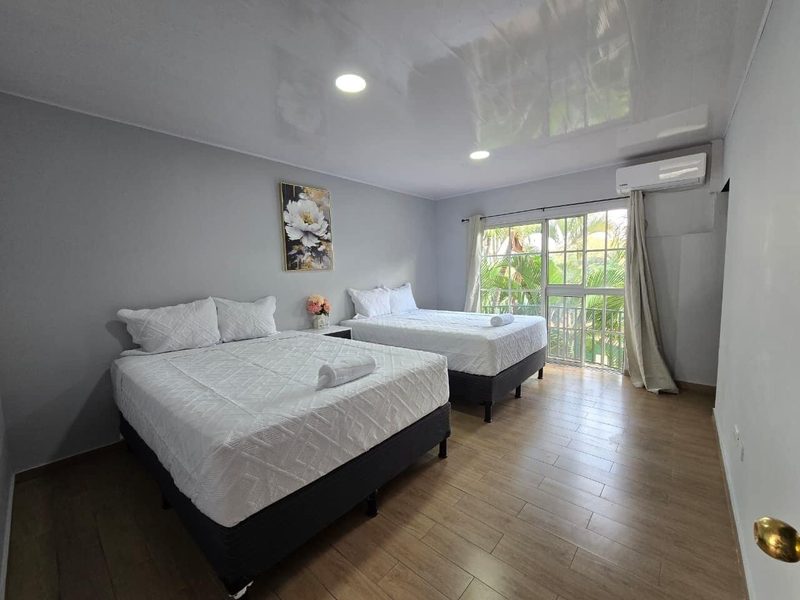
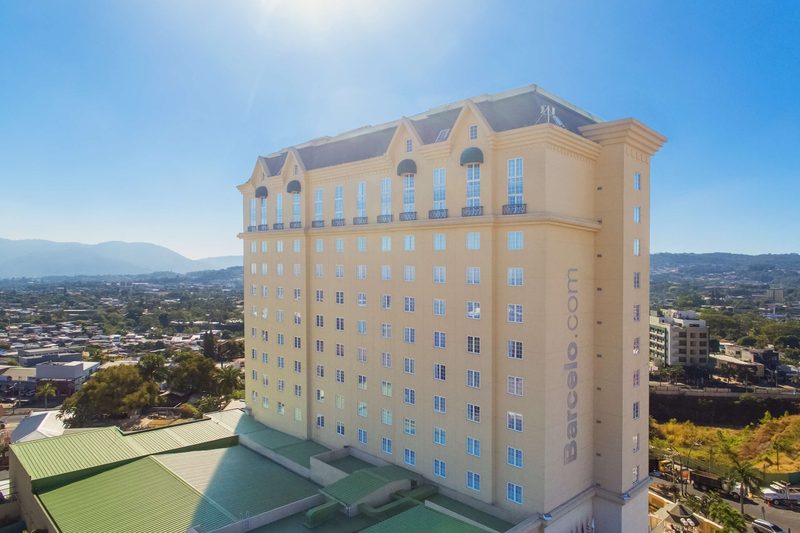
Where to Stay in San Salvador in October
Hand-picked hotels across price tiers for October travellers.
Public Holidays in October
Dates that affect opening hours, transport and crowds
Día del niño
Known in English as Children's Day. Observed nationwide as a public holiday.
Día de la raza
Known in English as Ethnic Pride Day. Observed nationwide as a public holiday.
Día del niño
Known in English as Children's Day. Observed nationwide as a public holiday.
Día de la raza
Known in English as Ethnic Pride Day. Observed nationwide as a public holiday.
Día del niño
Known in English as Children's Day. Observed nationwide as a public holiday.
Día de la raza
Known in English as Ethnic Pride Day. Observed nationwide as a public holiday.
Packing Checklist
Bookmark this page — your progress is saved between visits
Need the full list with shopping links?
Climate-specific gear, brand recommendations, and what to leave at home.
View San Salvador Packing List →Essential Tips
Insider knowledge and common pitfalls to avoid
Insider Knowledge
Safety in San Salvador has changed dramatically under the government's security policies enacted since 2022, and the city in 2026 is a different place than the one described in older guidebooks. That said, apply the same urban awareness you would bring to any Latin American capital: keep expensive items out of sight, avoid walking alone in unfamiliar neighborhoods after dark, and orient yourself around Colonia Escalón, Zona Rosa, and Santa Tecla as a first-time visitor. These are the neighborhoods with the strongest restaurant and nightlife scenes and the most comfortable street-level atmosphere for newcomers. The Centro Histórico is fine during daylight hours but thins out quickly after dark.
El Salvador uses the US dollar as its official currency. This eliminates exchange rate anxiety. It creates a daily quirk. Small vendors and pupuserías often cannot make change for larger bills. Carry small denominations, outside the city center. Bitcoin is technically legal tender. Do not count on using it for street level purchases. The vast majority of daily commerce runs on paper cash. ATMs in shopping centers dispense dollars reliably.
The best pupusas in the San Salvador orbit are not in San Salvador proper. They are in Olocuilta, a small town about 30 km (19 miles) south on the road toward the international airport. The main street there becomes a continuous stretch of pupuserías competing for your attention. Their specialty is pupusas de arroz, made with rice flour instead of corn masa. This gives a crispier, more delicate shell. Worth a stop on the way to or from the coast. Loroco with queso is the order.
October mornings in San Salvador are the magic window. Locals have built their entire daily rhythm around it. Markets open at dawn. Outdoor work happens before noon. The afternoon is for being under a roof. Temperatures sit around 23 to 25°C (73 to 77°F) in the morning with clear or partly cloudy skies, soft light, and manageable humidity. By early afternoon the clouds stack up along the volcanic ridgeline. By 3 PM the rain usually arrives. Follow this rhythm and October becomes a surprisingly pleasant month. Fight it and you will spend half your trip damp and irritated.
Avoid These Mistakes
Scheduling outdoor activities for the afternoon is a mistake. October's rainfall pattern loads heavily toward late afternoon and evening. Travelers who sleep in and head to a trailhead at noon consistently get caught in storms on exposed volcanic ridges. They get stranded in the Centro Histórico without cover. Flip your internal clock. Be at the trailhead or market by 7 AM. Plan indoor activities, the Catedral Metropolitana, the Museo de Arte de El Salvador, the UCA memorial, for after lunch. The city rewards early risers and punishes late starters this month.
Treating San Salvador as just a transit point to the coast or the volcanoes is shortsighted. The city itself deserves attention. Its wartime history is embedded in every plaza. The food in the Mercado Central demands exploration. The view from the Mirador de los Planes de Renderos, where the entire valley opens below you, requires time. Give it at least two full days. Travelers who land and immediately bolt for El Tunco miss the substance of the country. The substance is here.
Packing exclusively for heat is a common error. Yes, the daytime high reaches 29°C (85°F). October evenings drop to 19°C (67°F). There is enough wind and post rain dampness to make a t shirt insufficient. This is true at higher elevations around the volcano parks. That light jacket you almost left at home will be the most used item in your bag. It comes right after sunscreen and insect repellent.
Ready to plan your trip to San Salvador?
Now that you've got the research covered, here's where to go next.
Book Experiences in San Salvador
Top-rated things to do in San Salvador this October


Explore More Activities in San Salvador
Didn't see anything interesting yet?
Browse Viator's full catalog of tours, day trips, food experiences, and private guides in San Salvador.
See All San Salvador Tours on Viator